Player Guide
Start here: understand the OFC board
The minimum you need to play a hand confidently: rows, objective, and foul basics.
This page includes mock visuals and concrete board examples to make each rule easier to understand.
Source: docs/rules/01-glossary.md, docs/rules/02-core-flow.md, docs/rules/04-validity-and-foul.md
If you are new to OFC, keep this core idea first: you build 3 rows and they must end in the correct strength order.
1) Board structure in one view
- TOP (front): 3 cards
- MIDDLE: 5 cards
- BOTTOM (back): 5 cards

2) Primary objective
In standard profile, your hand is valid if:
TOP <= MIDDLE <= BOTTOM
Meaning bottom must be strongest, then middle, then top.
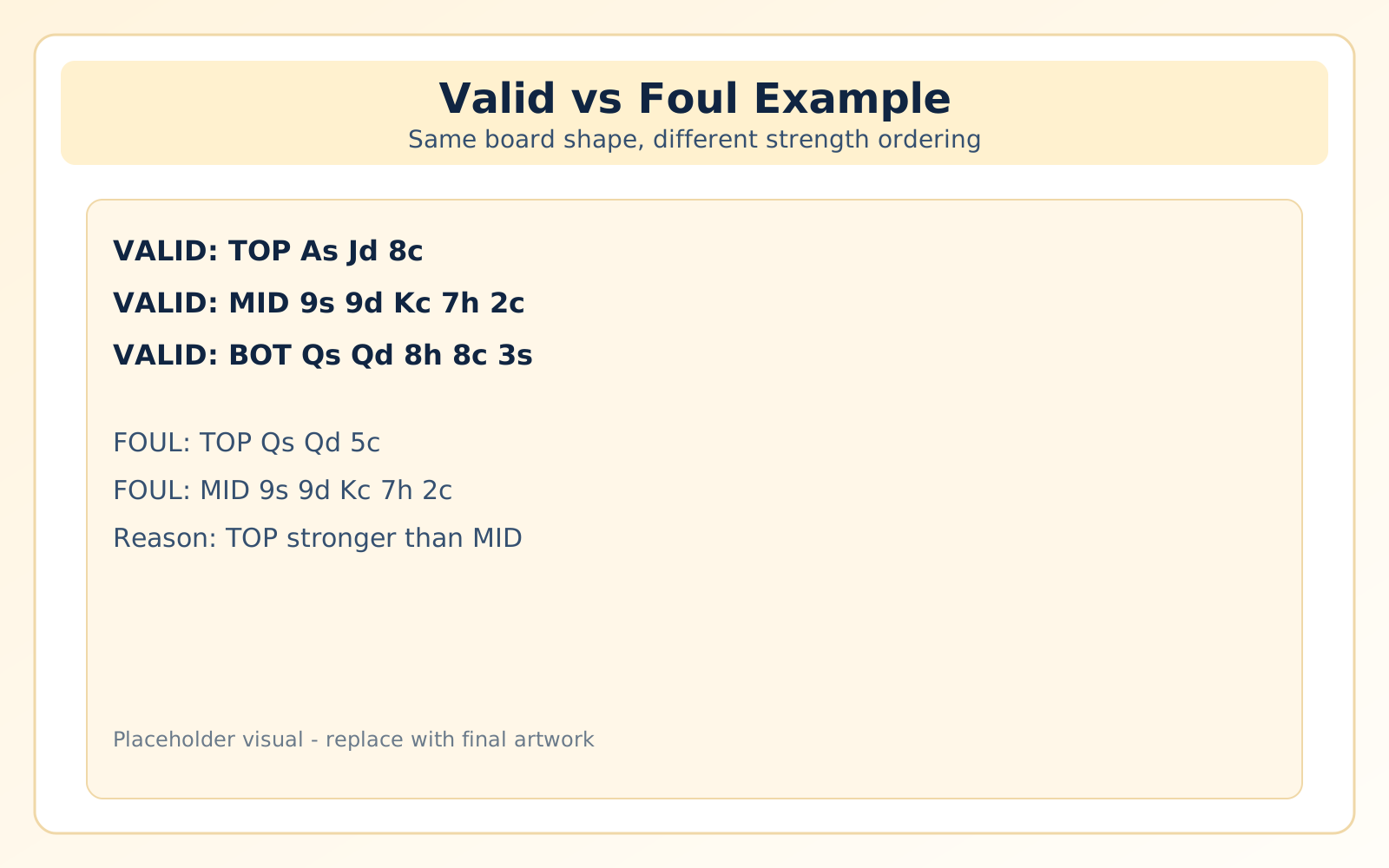
3) Quick example: valid vs foul
- Valid example:
- TOP:
As Jd 8c(high card) - MIDDLE:
9s 9d Kc 7h 2c(pair) - BOTTOM:
Qs Qd 8h 8c 3s(two pair)
- TOP:
- Foul example:
- TOP:
Qs Qd 5c(pair Q) - MIDDLE:
9s 9d Kc 7h 2c(pair 9) - TOP is stronger than MIDDLE.
- TOP:
Next, open the hand-flow chapter to understand when and how many cards you place each street.